

Soft Architecture: Styling Your Space with Hand-Embroidered Textiles

Modern homes are good at clean lines. Glass, leather, and smooth digital prints photograph well and hold up under bright light. But a room built only from flat, hard surfaces can feel oddly empty, like a space nobody actually lives in.
Hand embroidery adds something else: dimension. Raised thread sits above the fabric, catching light in a way flat print never can.
At Udaari Crafts, we work in home textile that treats texture as structure. It's the tactile weight of embroidered pieces set against the rigid geometry of a modern room. Layer a few pieces into your space, and the hard lines have something to lean against.
The Living Room: Layering Textures
A modern sofa in solid leather or tight-weave linen looks sharp under any light. What it often lacks is depth. Flat surfaces reflect light evenly, and your eye has nowhere particular to land. Texture gives a seating area somewhere worth sitting for a while.
Small Shadows, Real Depth
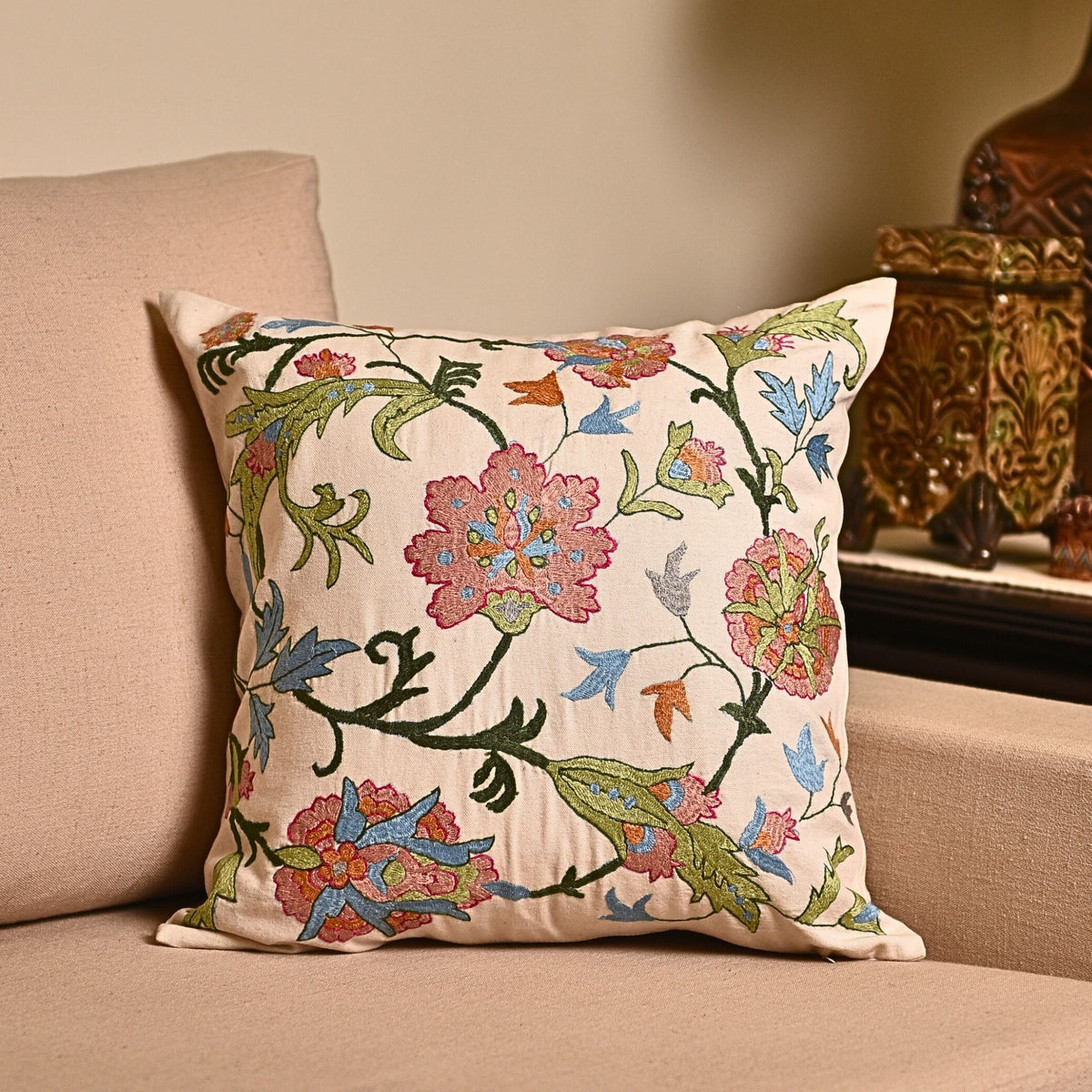
Swap a factory-printed pillow for a genuine hand-embroidered cushion, and the change shows up before you even register the pattern. Raised thread catches small shadows that flat fabric cannot produce. A cushion like this holds visible volume even in low light, and that alone can separate a showroom look from a lived-in room.
Building a set of embroidered cushion covers in Pakistan for a contemporary space starts with contrast. Handmade cushion covers vary a lot in scale and finish, so mix heavily embroidered heritage pieces with solid, neutral fabrics nearby. The solid pieces give your eye a place to rest between the more detailed ones.
Three ways to style embroidered cushions:
- Pair one heavily embroidered cushion with a solid, flat-weave companion so the eye has somewhere to rest.
- Set a large, bold motif next to a smaller, delicate stitch on the cushion beside it.
- Avoid overstuffing the inserts. A cushion should look plush, not rigid.
The Dining Room: Texture as a Focal Point
Dining tables carry real visual weight on their own, especially in glass or polished wood. Hand embroidered runners add formality and tactile weight to the surface itself.
Anchoring the Table
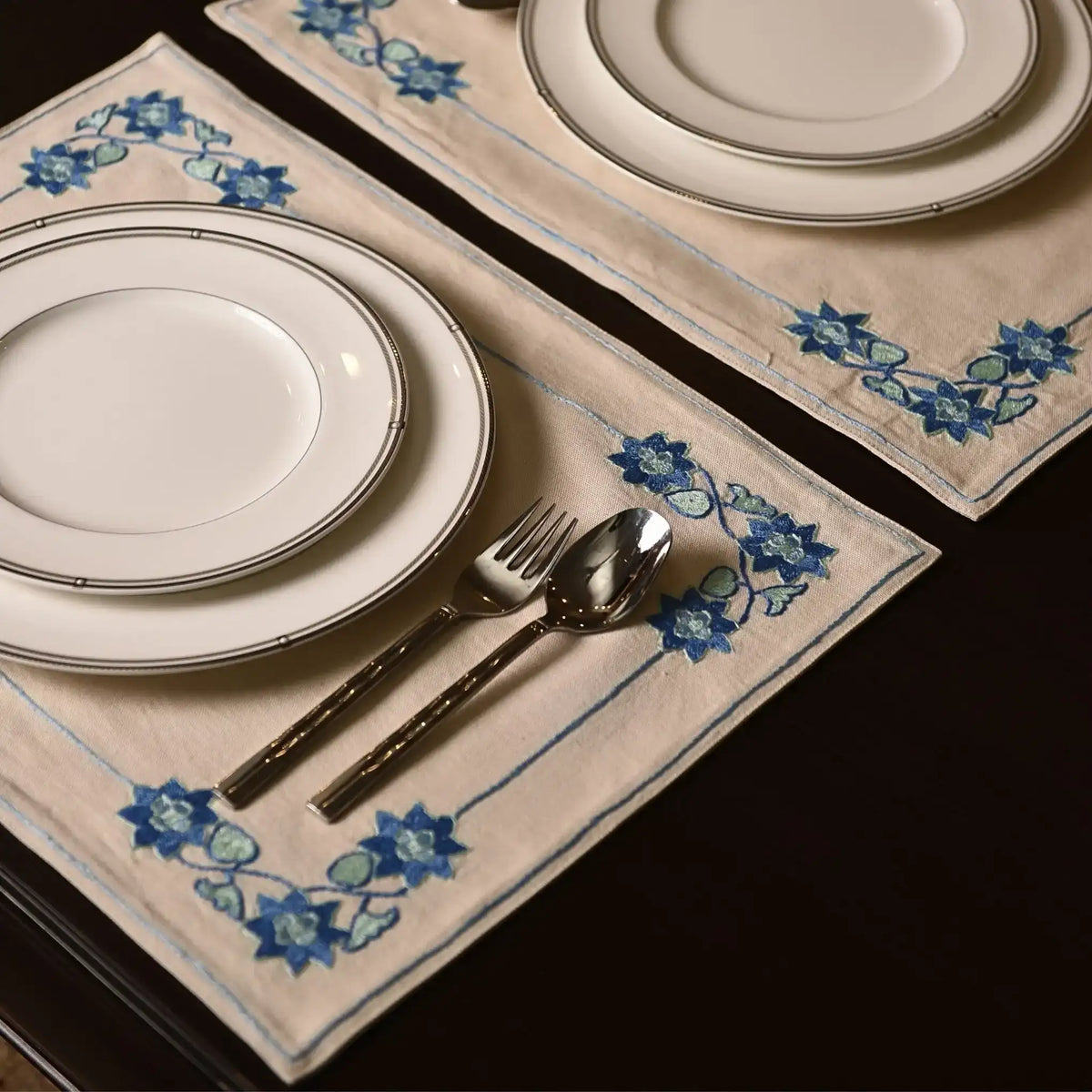
Set an embroidered table runner down the center of a bare table, and the thread's texture draws attention away from the table's hard edges. The surface reads heavier and more considered with that one addition.
Shoppers browsing table mats and runners online in Pakistan will notice hand embroidery holds a level of detail that machine stitching rarely matches. Thread gives a table its finished look in a way polish alone cannot.
Thread-detailed dining table napkins add a smaller, closer version of the same effect. Guests notice the raised stitching before the first dish arrives. It signals that the table was set with care.
Once you have anchored the table with textured threadwork, explore our complete guide on how to lay out handmade dining table decor for mealtime to finish the setting.
Reclaiming the Tea Trolley
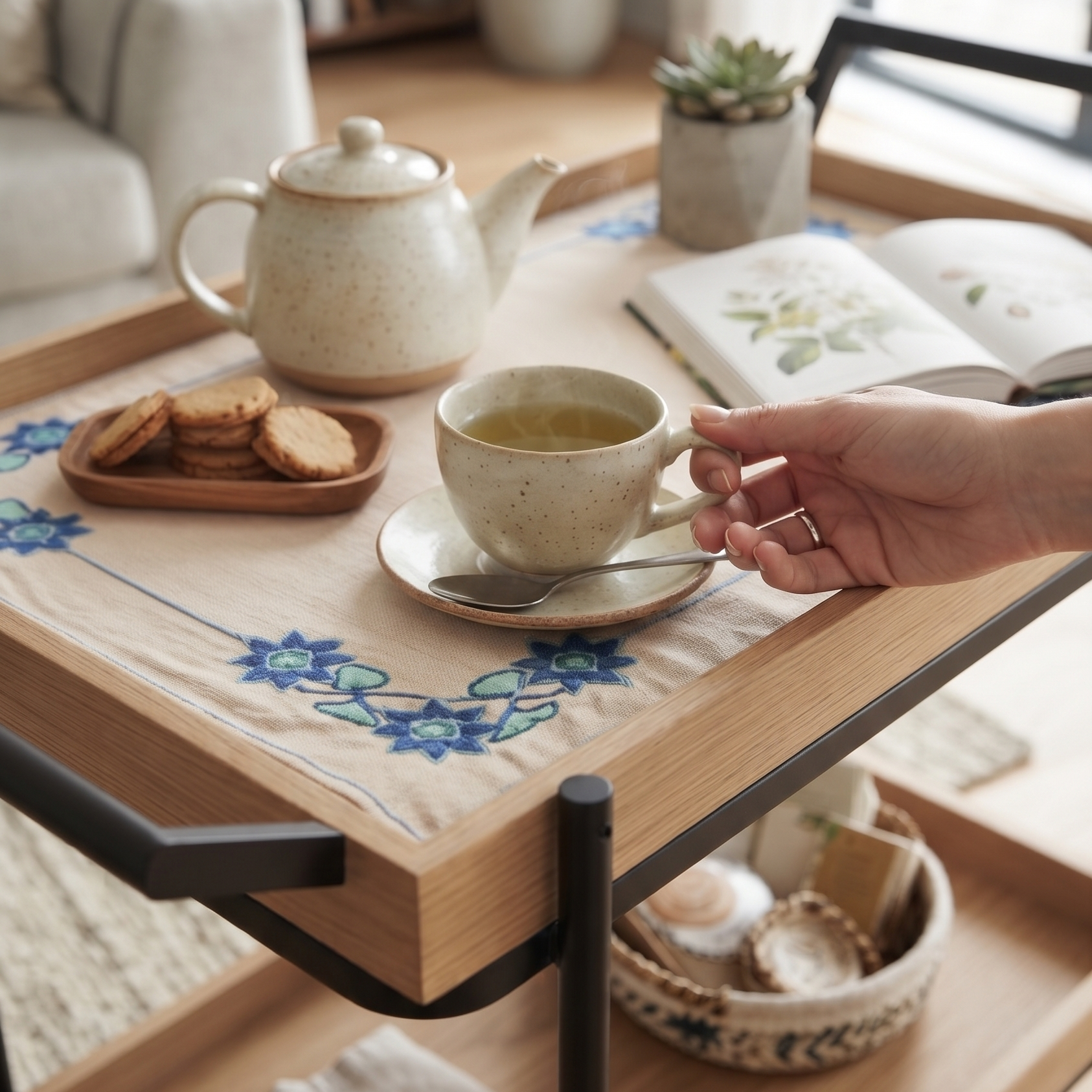
The trolley carries chai to the living room several times a day, yet its shelves are usually left bare. Every teacup rattles, and scratches show up within a season.
Line those shelves with hand made trolley mats. Stitching cushions the clatter of cups and saucers, and it protects the surface underneath from daily wear. Skip paper napkins here; woven, stitched cloth reads as more considered than flat print ever does. A trolley set up this way stops feeling like a cart wheeled out only for guests.
The Anatomy of the Stitch
Machine embroidery is fast and even. Every loop lands the same distance apart, under the same tension, and that precision keeps the fabric stiff.
Hand embroidery works differently. Tension shifts slightly from stitch to stitch, because a human hand guides the needle. This variation lets the fabric drape naturally over a cushion or fold softly across a table. It behaves like cloth because the stitching itself is uneven, not because of any finishing technique added afterward.
Bring the Texture Home
A room feels finished partly through what you feel, not only what you see under good lighting. Explore our collection of hand-embroidered cushions and table linens at Udaari Crafts, and start layering that texture into your own space.
Frequently Asked Questions
How can embroidered textiles improve home décor?
Embroidered textiles add physical dimension and texture to a room. The raised thread catches light and creates small shadows, bringing warmth, depth, and a comfortable, lived-in feel to spaces dominated by flat, hard surfaces like glass, wood, or leather.
How do embroidered table mats enhance dining table styling?
They break up the heavy, rigid lines of a wooden or glass dining table. The textured threadwork adds visual weight and formality, anchoring your layout and making the table look thoughtfully designed even before the food is served.
Are embroidered napkins good for everyday table settings?
Absolutely. They elevate daily meals by adding a tactile, crafted touch that flat-printed or paper napkins cannot match. The hand-stitched detailing signals care and transforms a simple family dinner into a more intentional experience.
How can embroidered trolley mats be used for home styling?
They turn a purely functional tea cart into a beautifully styled accent piece. Beyond looking elegant, handmade trolley mats serve a practical purpose by cushioning the clatter of teacups and protecting the trolley's surface from daily wear and scratches.

Open shelving looks effortless in photos and takes real work in practice. Every book, mug, and stray charger stays in view all the time, which means a shelf either looks...

Most households have one. A trunk, a top shelf, a cupboard nobody opens on an ordinary day, kept for pieces too beautiful to risk on a regular Tuesday. Somewhere along...

Guests rarely comment on the tea itself. What they notice, without quite naming it, is whether the table it arrived on was thought through. Sham ki chai has always worked...

Buying unstitched fabric starts with a decision most ready-made shopping skips entirely: what will this actually become? A length of block printed fabric on the table is a shirt, a...

Nothing on a good table matches perfectly. Walk into the homes doing this well right now and you'll notice the same thing: dark, swirling wood grain sitting right up against...

The table is set. The food is ready. And still, something looks unfinished, flat, crowded, lacking the kind of considered arrangement that makes guests stop before they reach for a...

A gift should do one of two things: be useful or be meaningful. The best ones manage both. Handmade woven items have been doing exactly that in Pakistani homes for...
