

The Art of Open Shelving: Styling with Handmade Woven Baskets

Open shelving looks effortless in photos and takes real work in practice. Every book, mug, and stray charger stays in view all the time, which means a shelf either looks curated or looks like you forgot to shut a cabinet door. There's no middle setting between the two.
The fix isn't owning less. It's finding a few pieces that can hold the eye and swallow the mess at the same time, which is really the whole job a basket does on a shelf. At Udaari Crafts, our handmade woven baskets are built structured enough to anchor a shelf and roomy enough to make clutter disappear into it, instead of sitting on top looking tidy for a week and then not.
Visual Weight: Anchoring the Shelves
Most shelf styling goes wrong in one specific way: heavy pieces on top, light ones on the bottom. That arrangement looks unstable even when the shelf itself is bolted straight into the wall. Weight belongs low, and everything above it reads as lighter by comparison once it does.
Grounding the Base
One large basket on the bottom shelf does more for the whole unit than three small jars scattered across it. A single solid shape reads as grounded, where a cluster of small ones just reads as stuff someone hasn't put away yet.
That basket earns its space twice over. It anchors the shelf visually, and it hides the router, the spare charger, the extra linens, all the things nobody wants staring back at them from across the room.
Size it properly, though, since this is where the effect falls apart fastest. Most standard shelving runs 10 to 12 inches deep, and a basket close to that depth sits flush against the wall behind it. Go too shallow, and there's a gap that undoes the entire grounded look you were going for.
Managing the Middle Tiers
Eye-level shelves need a lighter hand than the base does, since whatever sits there gets noticed first. A shallow tray does that job better than a full-size basket ever could.
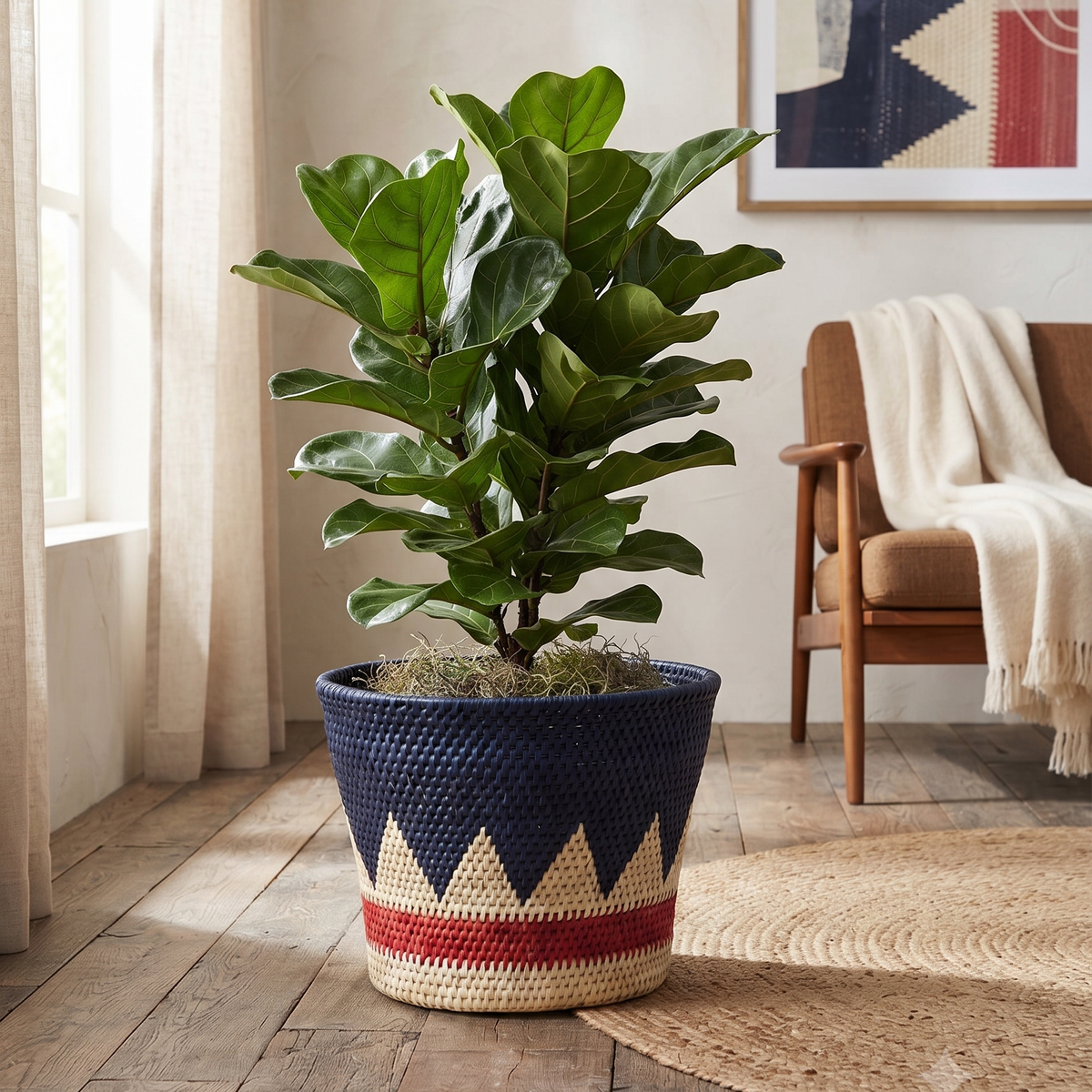
When sourcing woven basket and trays online in Pakistan, natural fiber over plastic is often the whole difference between a shelf that looks styled and one that looks stocked. Set a tray by the entryway, and loose keys finally have somewhere to land instead of a pile that grows all week on the counter next to them.
The Geometry of Styling
Shelves fill up fast with hard, smooth things: books, glass, ceramic, all catching light the same flat way. Enough of that, and a shelf starts looking like a catalog page instead of a room someone actually lives in day to day.
Breaking Up the Ceramics
A woven basket set between a stack of books and a glass vase changes the whole shelf more than its size would suggest. Natural fiber catches light differently than glass does, and that one difference is usually enough to soften everything sitting near it.
Shape helps too. Round against square-edged books gives the eye a second kind of contrast, not just material but line, and mixing a few round baskets in with rectangular ones across a run of shelving keeps nothing on it repeating too closely.
3 Rules for Styling Open Shelves
- Leave roughly a third of the shelf empty. Packed edge-to-edge reads as a storage closet, not a display.
- Group objects in threes. A tall vase, a stack of books, and a low round basket settle into a shape that feels balanced without feeling matched.
- Never place two identical materials side by side. Split your ceramics up with wood or woven fiber so no single texture takes over.
The Authenticity of Natural Fibers
Synthetic baskets look shiny for about a week, and then they start attracting static dust and trapping moisture, looking exactly as cheap as they were the whole time. Woven fiber ages the opposite way.
Why Materials Matter
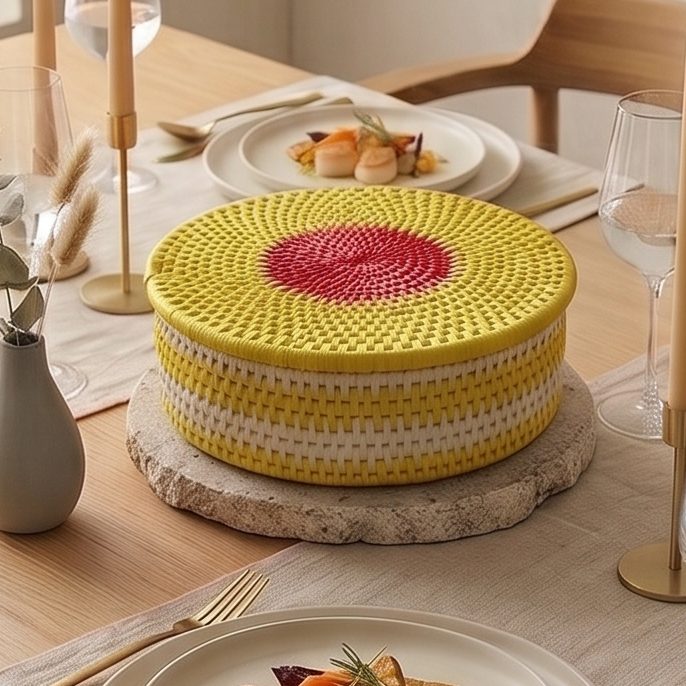
Handmade woven items in Pakistan are usually made from natural fiber, palm or willow being the most common ones you'll find. The weave lets air move through in a way molded plastic never will, so anything stored inside, spare bedding, out-of-season linens, dry pantry goods, stays dry instead of picking up a musty smell over months in storage.
There's a weight difference too, one you notice the first time you lift a full basket versus a full plastic bin of the same size. Woven fiber holds its shape under real load, while thin plastic tends to buckle under the same weight over time.
And it ages well where plastic doesn't. Natural fiber picks up a patina with handling, the color settling and deepening slightly over years of use, instead of cracking the way factory plastic eventually does.
Bring the Shelf Together
Good shelving was never about having less. It's about giving what you already own somewhere considered to sit, whether that's a stack of cookbooks or the basket that finally hides the router for good.
Shop our collection of handmade woven baskets, made by local artisans, and see what a little structure and warmth does for a shelf that's been looking either too perfect or not quite finished.

Most households have one. A trunk, a top shelf, a cupboard nobody opens on an ordinary day, kept for pieces too beautiful to risk on a regular Tuesday. Somewhere along...

Modern homes are good at clean lines. Glass, leather, and smooth digital prints photograph well and hold up under bright light. But a room built only from flat, hard surfaces...

Guests rarely comment on the tea itself. What they notice, without quite naming it, is whether the table it arrived on was thought through. Sham ki chai has always worked...

Buying unstitched fabric starts with a decision most ready-made shopping skips entirely: what will this actually become? A length of block printed fabric on the table is a shirt, a...

Nothing on a good table matches perfectly. Walk into the homes doing this well right now and you'll notice the same thing: dark, swirling wood grain sitting right up against...

The table is set. The food is ready. And still, something looks unfinished, flat, crowded, lacking the kind of considered arrangement that makes guests stop before they reach for a...

A gift should do one of two things: be useful or be meaningful. The best ones manage both. Handmade woven items have been doing exactly that in Pakistani homes for...
