

Dining Table Decor Serveware Ideas: Modern Host with Wooden & Woven

Nothing on a good table matches perfectly. Walk into the homes doing this well right now and you'll notice the same thing: dark, swirling wood grain sitting right up against a pale palm-leaf basket. Two textures that shouldn't work together, working together.
That's the pull of Handmade Woven Items in Pakistan set against a wooden base. One is raw. One is refined. Put them side by side and neither has to compete.
Why Wood and Woven Belong Together
A Sheesham or walnut table, styled entirely in dark, dense pieces, starts to feel like furniture rather than a place to eat. It needs something lighter in the mix. Straw and palm leaf do that job. Sun-bleached, breathable, a little uneven at the edges. Next to a piece of dark polished wood, the two just make sense.
Two habits worth keeping in mind. Build up in layers, don't spread out flat: woven tray on the bottom, wooden bowl or plate above it, one small accent piece somewhere near the top. And keep the woven pieces quiet. Their color is muted on purpose. It's there so the wood grain gets to be the thing you actually notice.
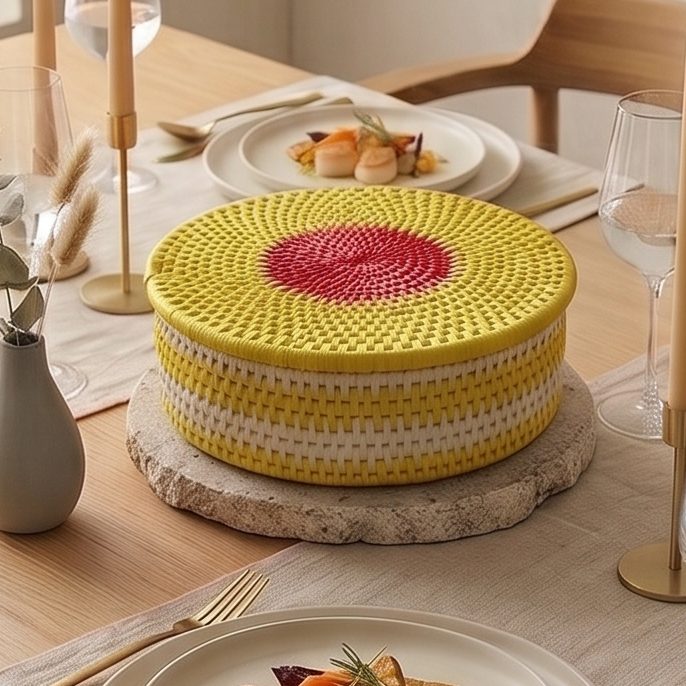
The Bread Basket That Anchors Everything
Naan and roti sit at the center of most Pakistani meals, which means whatever holds them sets the tone for the whole table. A steel container does the job. A handmade woven hotpot does something else entirely.
The material breathes, so bread stays warm without sweating inside a sealed lid. It's also just better to look at. Set it on a flat tray instead of straight on the tablecloth, and tuck a folded napkin under the lid if you want it to look finished rather than thrown together.
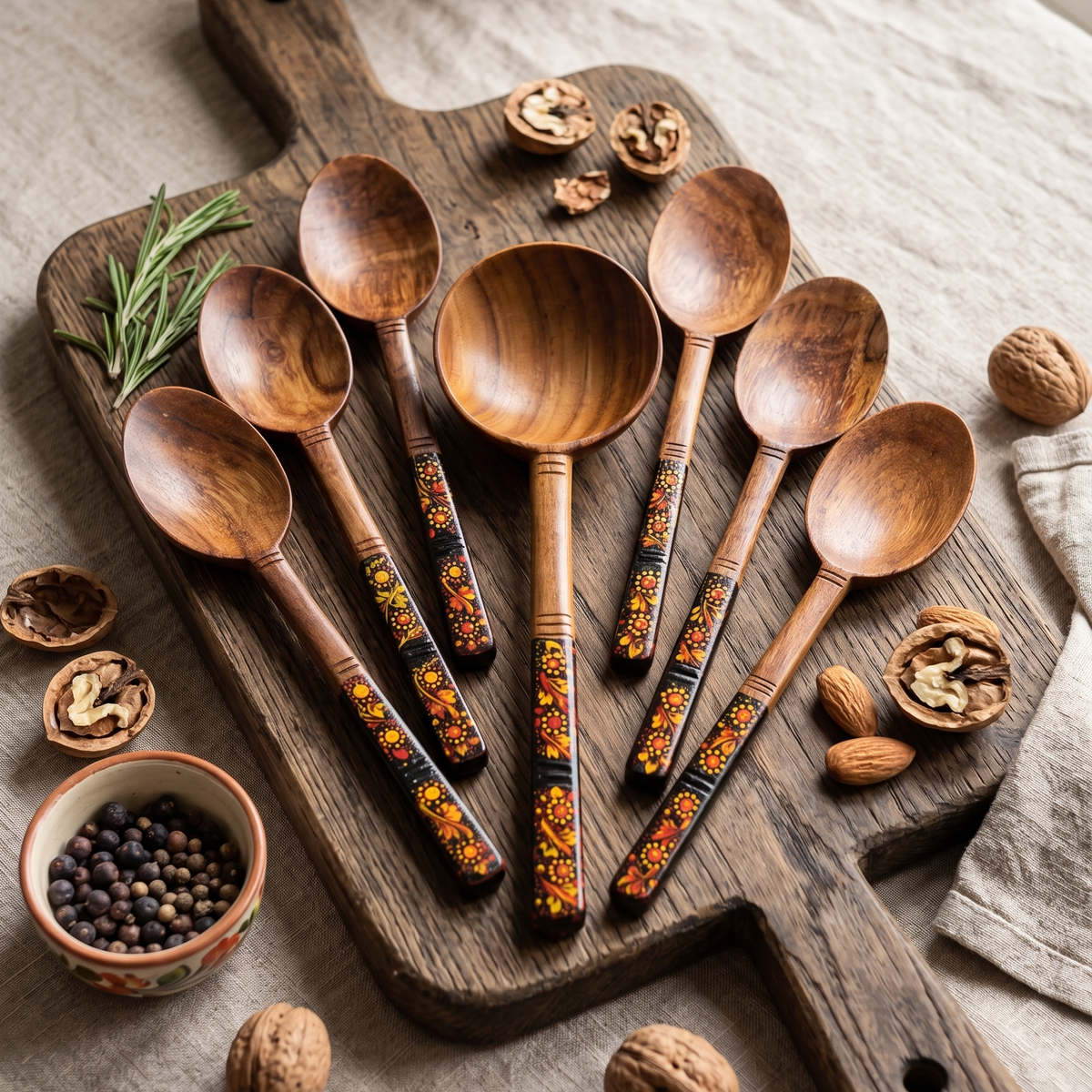
Place Settings That Don't Feel Store-Bought
Wood changes a place setting more than people expect. Plate first, then a smaller bowl stacked on top for daal or chutney or whatever's cooking that night. The grain does something to color, too. Chutney looks greener. Daal looks deeper. It's a small effect but it's real.
If you're not ready to retire your porcelain, don't. Use the wooden plate as a charger underneath your regular white bowl instead. You keep the ceramic, you gain the warmth. Add a set of wooden cutlery on a cloth napkin and the table already looks intentional before anyone's sat down.
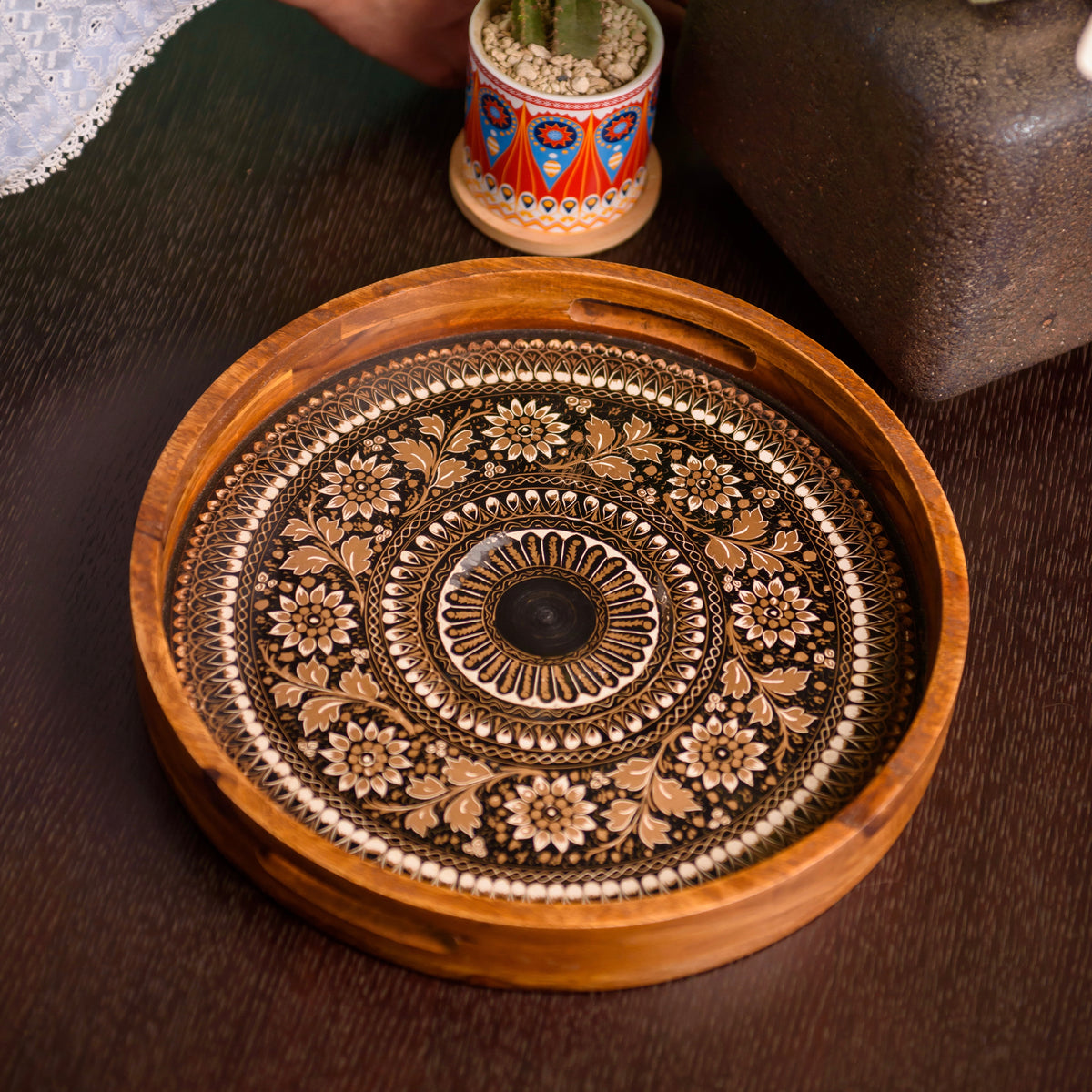
The Grazing Table
This is where you can go bigger. Kebabs, dried fruit, tea-time snacks, whatever the occasion calls for, a wide multi-grain wooden tray holds all of it without needing four or five smaller plates crowding the space. Fewer pieces, more room, same amount of food.
The grain itself does a strange thing to color. Mint chutney looks more green. A charred kebab looks darker and more dramatic. Group two or three trays together before the main course arrives and you've already built the mood of the meal.
Who Actually Makes These
The wood-turning and lacquerwork trace back to Sillanwali, where this craft has been passed down for generations. Raw timber, shaped by hand, into something smooth enough to eat off of.
The weaving side splits two ways. Date-palm leaf comes out of Khairpur in Sindh. Wheat-straw, or sarkanda, basketry comes out of Punjab's older rural traditions.
Kashf Foundation runs Udaari Crafts specifically so that every piece traces back to a woman artisan somewhere in one of these regions. Buy one of these and that money goes toward her income, directly, not through five layers of supply chain.
Keeping It All Alive
Wood: never let it sit in water, never put it in a dishwasher. Wash it by hand, dry it right away, and rub in a little food-safe mineral oil every couple of months so the grain doesn't dry out and crack.
Woven pieces ask for less work but more attention to moisture. If something spills, wipe it with a barely damp cloth, not a wet one, and let it dry out fully somewhere with airflow before you put it away.
The Point of All This
Mehmaan nawazi is really just about making someone feel looked after. A table set with pieces like these does part of that work before the food is even out. Every piece carries a little bit of someone else's hands in it.
If any of this looks like your kind of table, the full collection is worth a look.
Frequently Asked Questions
How can I decorate a dining table without making it look overcrowded?
The secret is to build up in layers rather than spreading items flat across the table. Use a woven tray as an anchor, stack a wooden bowl or plate on top, and group small functional items (like a coaster) together on a trivet. This keeps the setup intentional and prevents clutter.
How do I style a dining table for guests?
Focus on warmth and modern Mehmaan Nawazi. Swap out multiple small plates for one large, multi-grain wooden tray to serve appetizers beautifully while saving space. Serve fresh naan in a breathable, handmade woven hotpot to act as a rustic centerpiece that is both functional and inviting.
What should I use for a natural dining table décor?
Mix contrasting organic textures. Pair the dark, rich grains of Sheesham or walnut wood with the pale, sun-bleached tones of woven date-palm leaf or wheat straw. Handcrafted wooden plates, woven placemats, and a simple vase of dried seasonal flora create a perfectly balanced, earthy aesthetic.

Open shelving looks effortless in photos and takes real work in practice. Every book, mug, and stray charger stays in view all the time, which means a shelf either looks...

Most households have one. A trunk, a top shelf, a cupboard nobody opens on an ordinary day, kept for pieces too beautiful to risk on a regular Tuesday. Somewhere along...

Modern homes are good at clean lines. Glass, leather, and smooth digital prints photograph well and hold up under bright light. But a room built only from flat, hard surfaces...

Guests rarely comment on the tea itself. What they notice, without quite naming it, is whether the table it arrived on was thought through. Sham ki chai has always worked...

Buying unstitched fabric starts with a decision most ready-made shopping skips entirely: what will this actually become? A length of block printed fabric on the table is a shirt, a...

The table is set. The food is ready. And still, something looks unfinished, flat, crowded, lacking the kind of considered arrangement that makes guests stop before they reach for a...

A gift should do one of two things: be useful or be meaningful. The best ones manage both. Handmade woven items have been doing exactly that in Pakistani homes for...
