

Studio Diaries, Vol. 01 The Wooden Collection

Every piece we make starts the same way: a material we believe in, a function we won't compromise on, and a long stretch of figuring out how to marry the two. The new wooden collection was no different, except this time, we wrote it all down.
Studio Diaries is our way of telling the story before the product page goes live. The sourcing decisions, the workshop mess, the prototype that got scrapped. This entry follows one hero piece from moodboard to final finish, handmade wood products built in Pakistan, from materials chosen close to home. Sheesham and a lot of sanding in between.
Phase 1: The Vision & The Wood
We kept coming back to a tray.
Not a statement piece. Not something you'd style for a shoot and never touch again. Just a tray wide enough to be useful, proportioned well enough that you'd leave it out. The kind of object that doesn't ask for your attention but holds it anyway.
The moodboard started with the handicrafts of Pakistan, where we grew up around the density of Sheesham, the way it darkens unevenly with age, the grain that looks almost striped in certain light.
Finding the right cut took longer than expected. We're particular about grain direction and density in a way that probably seems excessive until you've watched a piece split six months after it's finished. Our supplier knows us by now. We went through a few options before landing on a Sheesham cut that felt right, with tight grain and no soft spots near the edges.
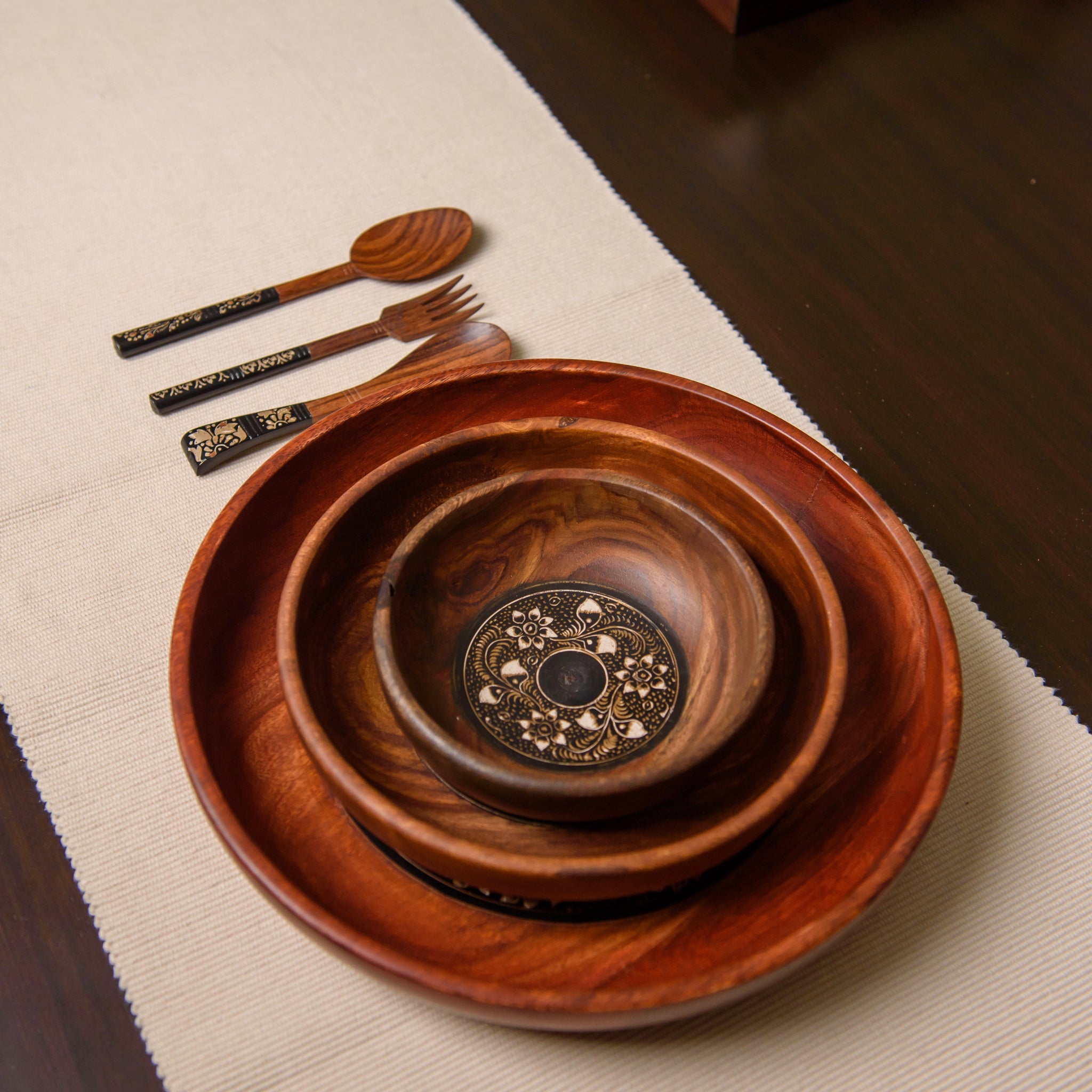
Part of what draws us to working this way is the same instinct behind eco-friendly home decor in Pakistan's craft tradition: you don't waste what took decades to grow. You choose carefully, you use fully, and you don't reach for something else because it's easier.
The early sketches were rough. Dimensions in pencil, proportions guessed at rather than calculated. Like most handmade wooden items, the product doesn't fully exist on paper, it exists in the back-and-forth between what you drew and what the material will actually do.
Phase 2: Into the Workshop
The first prototype came out wrong.
Not catastrophically, it held together; the cuts were clean. But when we set it down and looked at it, something sat off in a way that took a while to name. The tray was too shallow. On paper, the depth had looked balanced, but in three dimensions, it read flat, more like a frame around empty space than something with any presence. We sat with it for a day. Came back. Still wrong.
That version got shelved.
Every wood handicraft hits a moment like this where the drawing and the object stop agreeing with each other. The second prototype corrected the depth but introduced a new problem: a curved detail on the handle that we'd been attached to since the first sketch. It looked considered on paper. On the actual piece, it looked like a mistake, like something that had slipped. We argued about it for longer than we should have. Eventually, we cut it. Straight edge, single routed groove, nothing more. The tray immediately felt like itself.
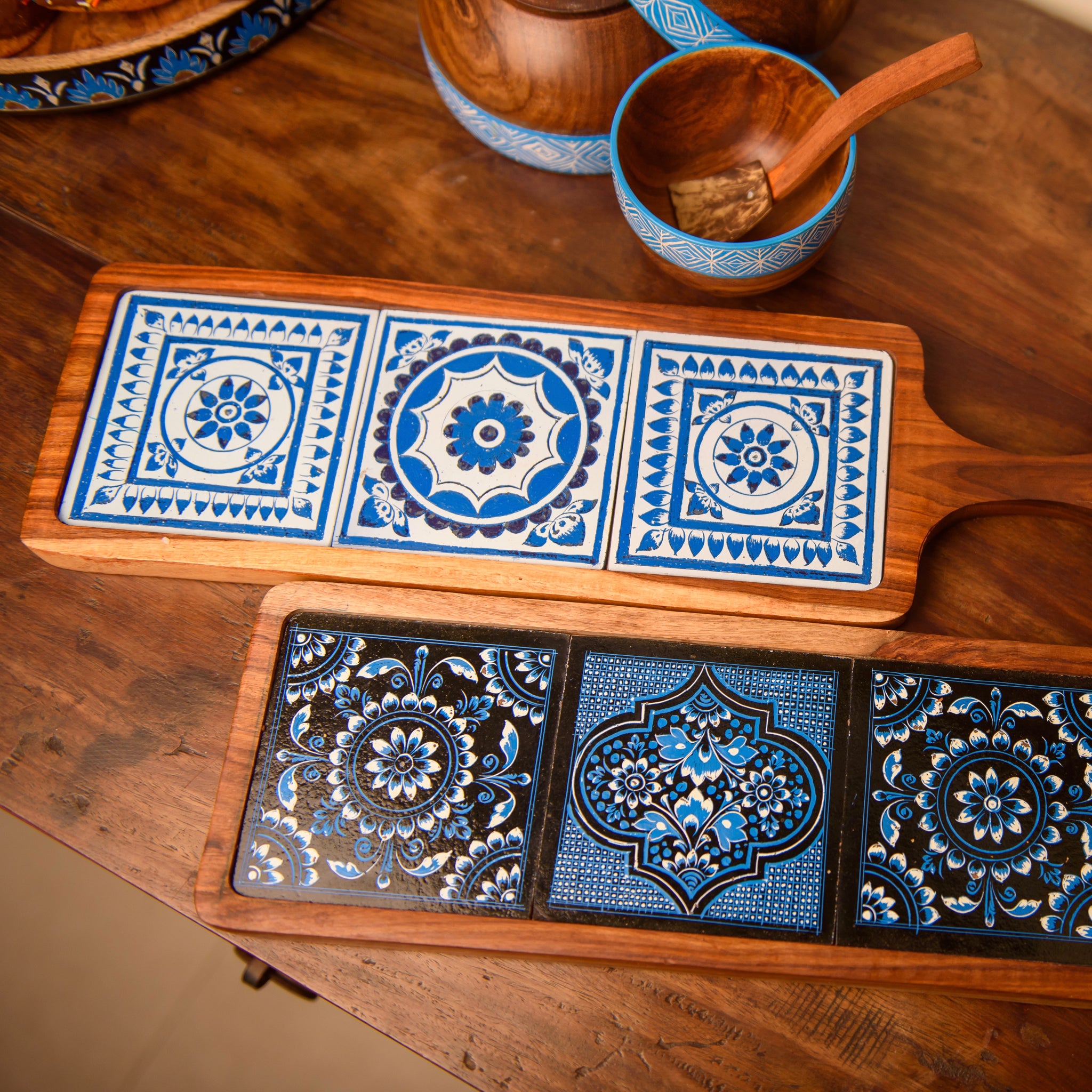
This is what distinguishes Pakistani artisans' handmade crafts from anything made at scale, not the romance of it, but the specific, unglamorous reality of going back to the bench. There's no version where you skip the prototype that doesn't work. You just have to make it, look at it honestly, and decide what it's telling you.
We're still not sure the handle is exactly right. That might sound like an odd thing to admit about a finished product. But that uncertainty is part of it; you reach a point where the piece is ready, even if it isn't perfect, because perfect would mean never finishing anything.
Phase 3: The Finishing Touches
Sanding takes as long as it takes.
Four grits, hand-checked at each pass. You're looking for the point where the surface stops feeling worked and starts feeling like wood again, like the tool marks have receded enough that what's left is just the material. With Sheesham, this takes time because the grain is dense and the surface wants to be smooth before it actually is. You have to keep going past the point where it seems done.
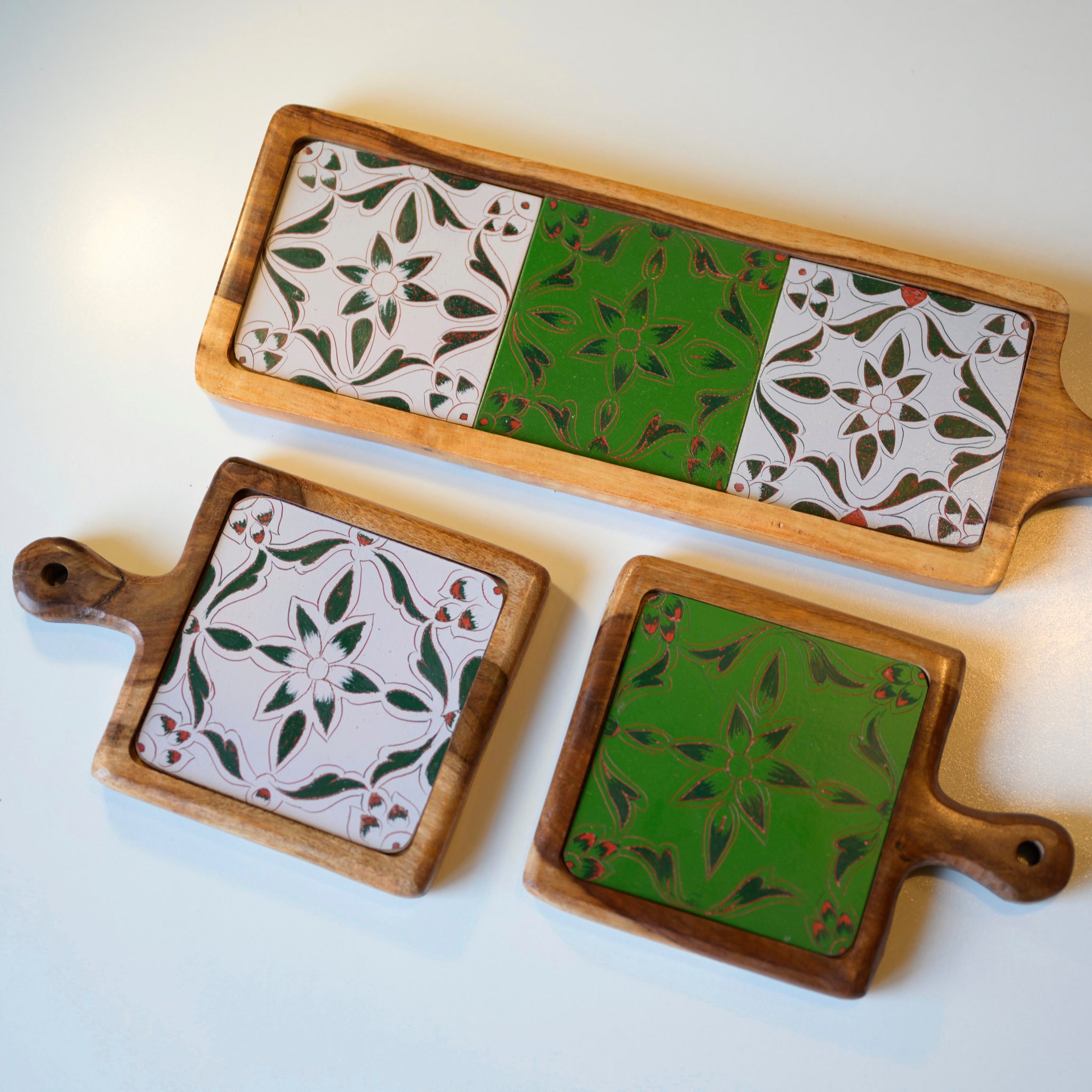
The finish is a natural oil, applied thin and buffed back. No lacquer, nothing that sits on top. The goal is a surface that protects the wood without putting anything between you and it, the kind of finish that makes these handmade wooden gifts worth keeping rather than displaying. The grain stays visible. The color variation across the surface, in the places where the Sheesham shifts from amber to deep red, stays visible. That variation isn't a flaw. It's the whole point.
The final check is less formal than it sounds. You pick the piece up. You run your hand across it. You set it down on a flat surface and look at whether it sits right. There's no metric for when something is ready; you just know, or you don't, and if you don't, you go back.
The Reveal
The tray is part of the new wooden collection, available now. It's among the handmade products in Pakistan we're most attached to this season, not because it's the most complex thing we've made, but because it took the most convincing to get right.
It works on a kitchen counter. A bedside table. An entryway shelf where things collect at the end of the day. It holds objects the way a good tray should, without making a fuss about it.
Stay tuned, and we will step outside the studio to share the stories behind local artisan decor in Pakistan, the hands that have shaped this work long before we picked up a sketchpad. The craft doesn't start with us, and we think it's time you met the people it does start with.
Frequently Asked Questions
Authentic handmade wooden products are best sourced from brands and workshops that are transparent about their process, materials, and making. At Udaaricrafts, each piece is developed in-studio and crafted using locally sourced woods like Sheesham with a focus on durability and long-term use rather than quick production.
They are, if you value how something is made as much as how it looks. Handmade wooden pieces take time, multiple prototypes, careful material selection, and hours of finishing. What you’re paying for isn’t just the final object, but the decisions, revisions, and craftsmanship that go into making it feel right in everyday use.
Not in the mass-produced sense, and that’s intentional. These pieces are designed for homes that appreciate simplicity, material honesty, and objects that age well over time. They’re meant to be used daily, not stored away, but they resonate most with people who prefer fewer, better-made things.

Open shelving looks effortless in photos and takes real work in practice. Every book, mug, and stray charger stays in view all the time, which means a shelf either looks...

Most households have one. A trunk, a top shelf, a cupboard nobody opens on an ordinary day, kept for pieces too beautiful to risk on a regular Tuesday. Somewhere along...

Modern homes are good at clean lines. Glass, leather, and smooth digital prints photograph well and hold up under bright light. But a room built only from flat, hard surfaces...

Guests rarely comment on the tea itself. What they notice, without quite naming it, is whether the table it arrived on was thought through. Sham ki chai has always worked...

Buying unstitched fabric starts with a decision most ready-made shopping skips entirely: what will this actually become? A length of block printed fabric on the table is a shirt, a...

Nothing on a good table matches perfectly. Walk into the homes doing this well right now and you'll notice the same thing: dark, swirling wood grain sitting right up against...

The table is set. The food is ready. And still, something looks unfinished, flat, crowded, lacking the kind of considered arrangement that makes guests stop before they reach for a...

A gift should do one of two things: be useful or be meaningful. The best ones manage both. Handmade woven items have been doing exactly that in Pakistani homes for...
