

Sustainable Home Decor From Local Women Artisans

Your home says something about you with what you've chosen to bring into it. Most decor fills space. But if you choose carefully, it carries a story, holds a memory, and connects you to the hands that made it.
At Udaari Craft, we work with women artisans across Pakistan to create handmade home décor that does exactly that. Pieces that are beautiful, yes! but also purposeful.
Made slowly, made well, and made by someone whose skill and livelihood are woven into every finished object. This is what a sustainable home decor looks like to us.
The Difference Between Filling a Home and Telling One
Walk into two similar homes, with the same layout, same color palette, similar furniture, and one will feel like a showroom while the other feels lived in. The difference is rarely about budget. It's about origin.
Mass-produced décor is silent. It was designed anonymously, manufactured at scale, and arranged on a shelf until someone bought it. There is no one behind it, no decision that wasn't optimized for cost, no hand that touched it with care. It fills the room but tells you nothing.
Handmade products are different. They carry a journey: the maker, the material, the method. When an object was shaped by someone who understood what they were doing and took the time to do it well, that quality lives in the finished piece. The artisan stories behind Pakistan's craft tradition are embedded in every object made this way, quietly present, whether or not they're ever spoken aloud. Sustainability, to us, begins here: not just in the materials used, but in the meaning carried.
The Women Artisans of Pakistan Behind Our Work
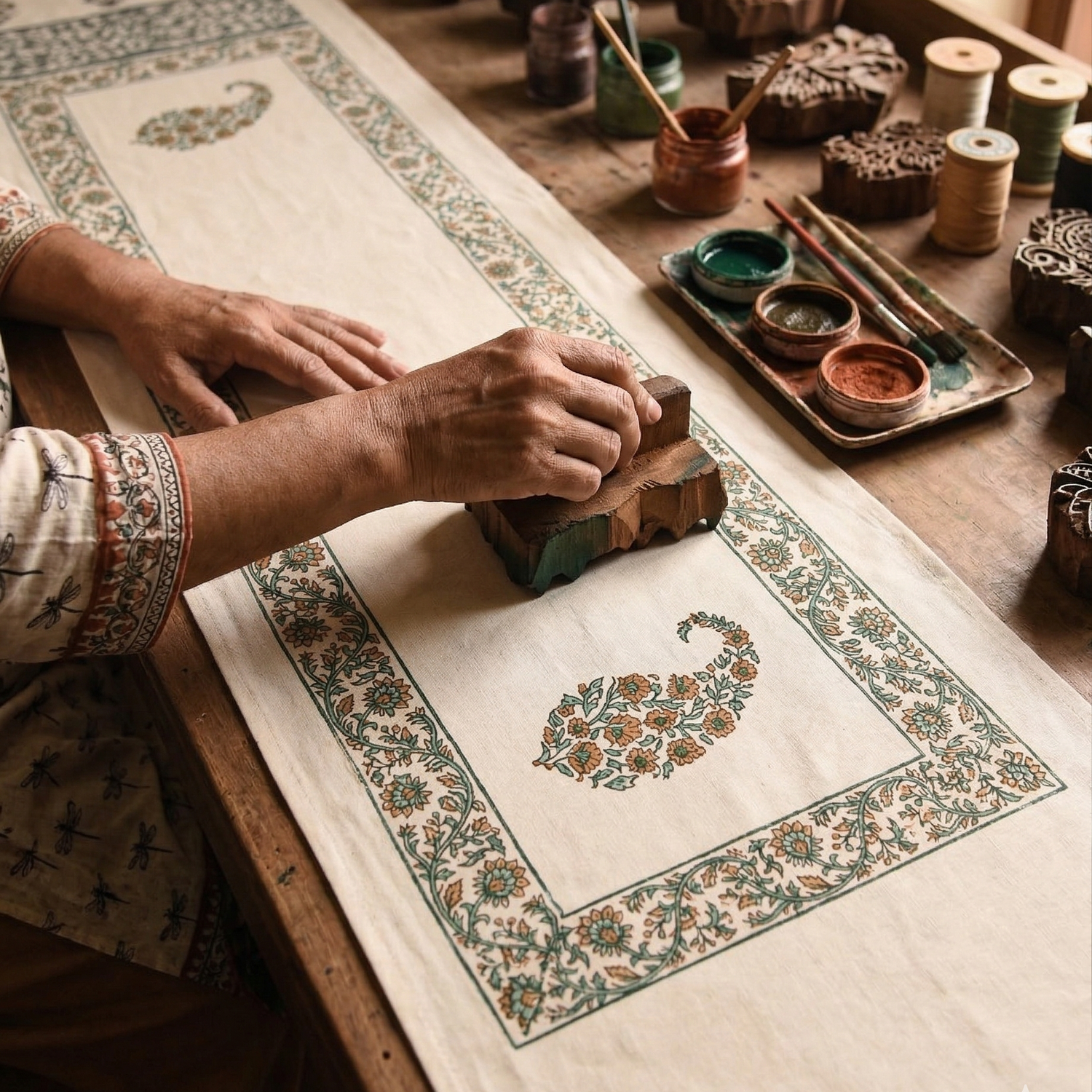
Our artisans are not background figures in our story; they are the center of it. Every piece in our collection exists because a woman in Pakistan sat down and made it, drawing on years of practice to produce something worth keeping.
What Their Craft Actually Involves
It is easy to underestimate what handmade work requires until you understand what it actually demands:
- Years of learning before a single sellable piece is made, the early work goes wrong in ways that teach you how to go right.
- Reading wood grain to understand where it holds under pressure and where it won't the foundation of any serious wood handicraft, and knowledge that comes from handling material repeatedly, not from a manual.
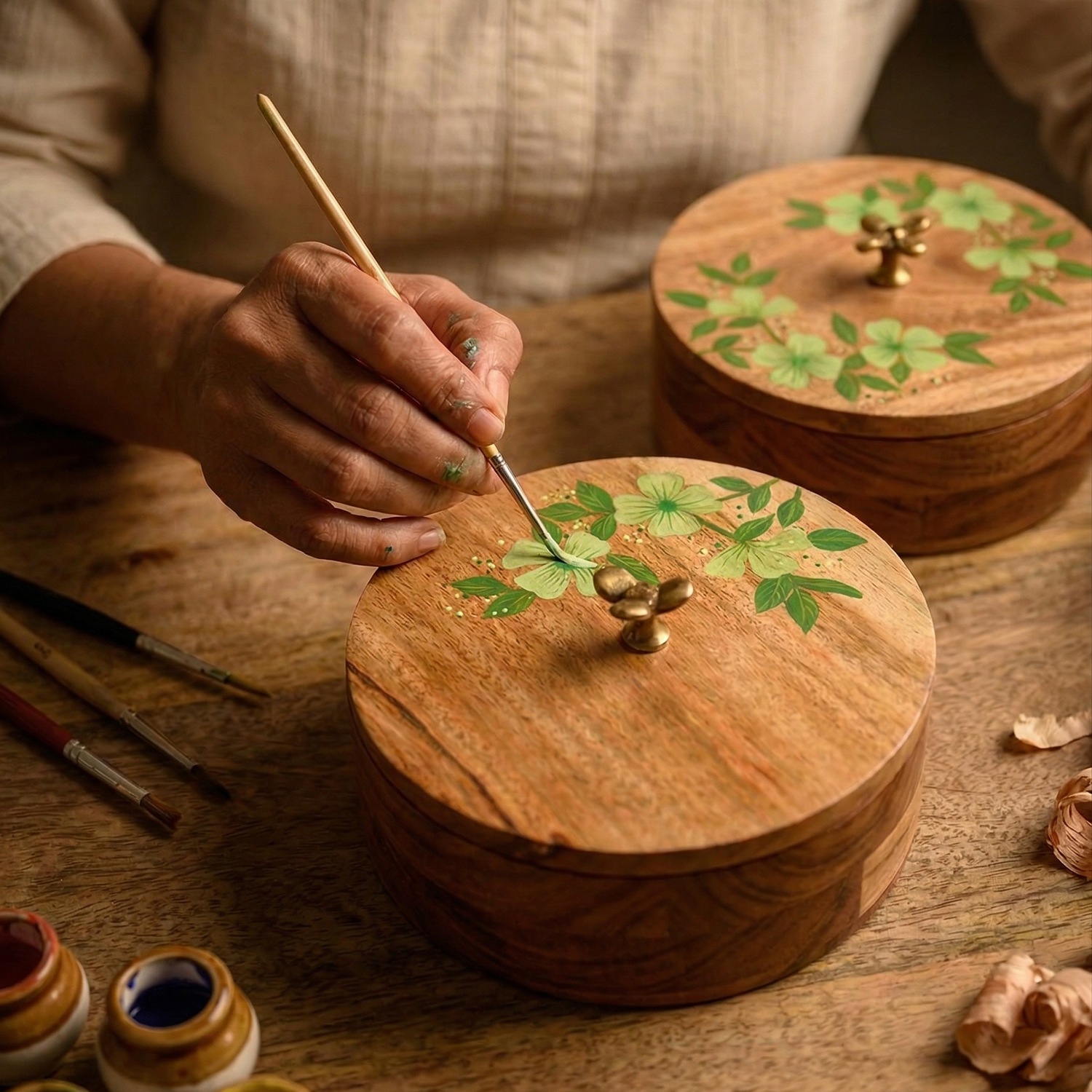
- Building a finish in layers by hand, each coat is read and assessed before the next is applied, a depth that a sprayed finish cannot replicate.
- Carving consistent edges across an entire piece without the enforcement of a machine, only a trained hand maintains that consistency.
- Knowing when a piece is finished, the judgment that separates practiced craft from approximation, and that only comes from years of making things.
When you bring one of our handmade wood products home, you are bringing the work of someone who genuinely knows what they are doing.
Decor That Empowers The Women Artisans
We want to be direct about something: buying from Udaari Craft is an act of recognition and women's empowerment. It is a transaction between a buyer who values quality and a maker who delivers it. When you support local artisans in Pakistan, you are not rescuing anyone; you are recognizing that the work is skilled, that the skill has value, and that the value deserves fair compensation.
What sustains their work is not sympathy purchasing. It is a consistent demand for objects that are genuinely excellent, for buyers who return because the tray they bought last year still looks right on their coffee table, and they want something else made with the same care. The handicrafts of Pakistan have survived this long not because of sentiment, but because the work is genuinely good and people keep choosing it.
Fair compensation is the mechanism through which everything else follows. When a woman earns properly from her expertise, not piece-rate wages, but real recognition of skilled work, the effects extend far beyond the transaction.
What Changes When One Woman Earns Well
- She contributes to household financial decisions, shifting what is possible for her family.
- Her children see skilled work valued that reshapes what they understand work, and women's work specifically, to mean.
- The craft gets passed on because it is worth learning an apprentice appears where there might otherwise have been none.
- A tradition that might quietly disappear instead deepens and continues into the next generation.
What Sustainable Home Decor in Pakistan Actually Means
The word sustainable gets attached to a lot of things: recycled materials, eco-certifications, and carbon footprint calculations. These matter. But we think sustainability in home décor requires something broader than a material checklist.
The handicrafts of Pakistan, woodworking traditions, carving methods, and finishing techniques passed down across generations exist because they were practiced continuously and valued consistently. That continuity is its own form of sustainability, and it is just as fragile as any ecosystem. For us, three things must be sustained simultaneously:
- The object is built to last rather than trend-dependent, made from materials that age into something richer rather than degrading. A handmade wood product bought today will not look dated in a room redesigned around a different palette four years from now. It will look like itself.
- The maker is fairly compensated, professionally recognized, and economically stable enough to keep practicing her craft and pass it to the next woman who wants to learn it
- The tradition is kept alive through consistent demand for genuinely good work, not preserved artificially through sympathy, but sustained naturally because the quality justifies the choice
When all three are sustained, the system works for the home that receives the object, the artisan who made it, and the craft that will outlast both.
How One Piece Changes a Room
You don't need to redesign anything. You don't need a mood board, a renovation plan, or a new color scheme. One handmade piece, placed well, shifts the feeling of a surface and, through it, the whole room.
What To Start With
If you're new to bringing handmade wood products into your home, these are the pieces that make the most immediate difference:
- A wooden tray on a coffee table turns a flat surface into a composition, gives the objects around it a home, and adds warmth to marble or glass that would otherwise read cold
- A carved candle holder on a dining table, small enough to go unnoticed individually, is present enough to change the atmosphere of an evening meal
- A decorative object on a shelf, a carved bowl, a wooden sculpture, anything with visible craft breaks the uniformity of manufactured objects and gives the eye somewhere interesting to land
- A wooden frame around a photograph makes the image feel chosen rather than printed, considered rather than placed
The handmade quality doesn't announce itself. It settles. And a room that has it feels different from one that doesn't, warmer, more considered, more like the person who lives in it made real choices about what belongs there.
A Home That Holds More Than Furniture
Your home reflects what you value. The objects in it are small but real declarations of taste, yes, but also of what kind of work you want to support and what kind of stories you want your space to hold.
Choosing sustainable home decor in Pakistan means the tray on your coffee table came from someone's hands, not a factory floor. It means the woman who made it was paid fairly for the expertise she spent years developing. It means a craft tradition continues because there was consistent demand for the quality it produces.
We built Udaari Craft to make that choice easy to bring the work of skilled women artisans in Pakistan into modern homes without asking you to compromise on beauty, quality, or design. Every piece in our collection carries a story worth bringing home.
Explore our collection and find a piece that belongs in your space, handmade with purpose, by the women artisans behind every object we make.

Open shelving looks effortless in photos and takes real work in practice. Every book, mug, and stray charger stays in view all the time, which means a shelf either looks...

Most households have one. A trunk, a top shelf, a cupboard nobody opens on an ordinary day, kept for pieces too beautiful to risk on a regular Tuesday. Somewhere along...

Modern homes are good at clean lines. Glass, leather, and smooth digital prints photograph well and hold up under bright light. But a room built only from flat, hard surfaces...

Guests rarely comment on the tea itself. What they notice, without quite naming it, is whether the table it arrived on was thought through. Sham ki chai has always worked...

Buying unstitched fabric starts with a decision most ready-made shopping skips entirely: what will this actually become? A length of block printed fabric on the table is a shirt, a...

Nothing on a good table matches perfectly. Walk into the homes doing this well right now and you'll notice the same thing: dark, swirling wood grain sitting right up against...

The table is set. The food is ready. And still, something looks unfinished, flat, crowded, lacking the kind of considered arrangement that makes guests stop before they reach for a...

A gift should do one of two things: be useful or be meaningful. The best ones manage both. Handmade woven items have been doing exactly that in Pakistani homes for...
